
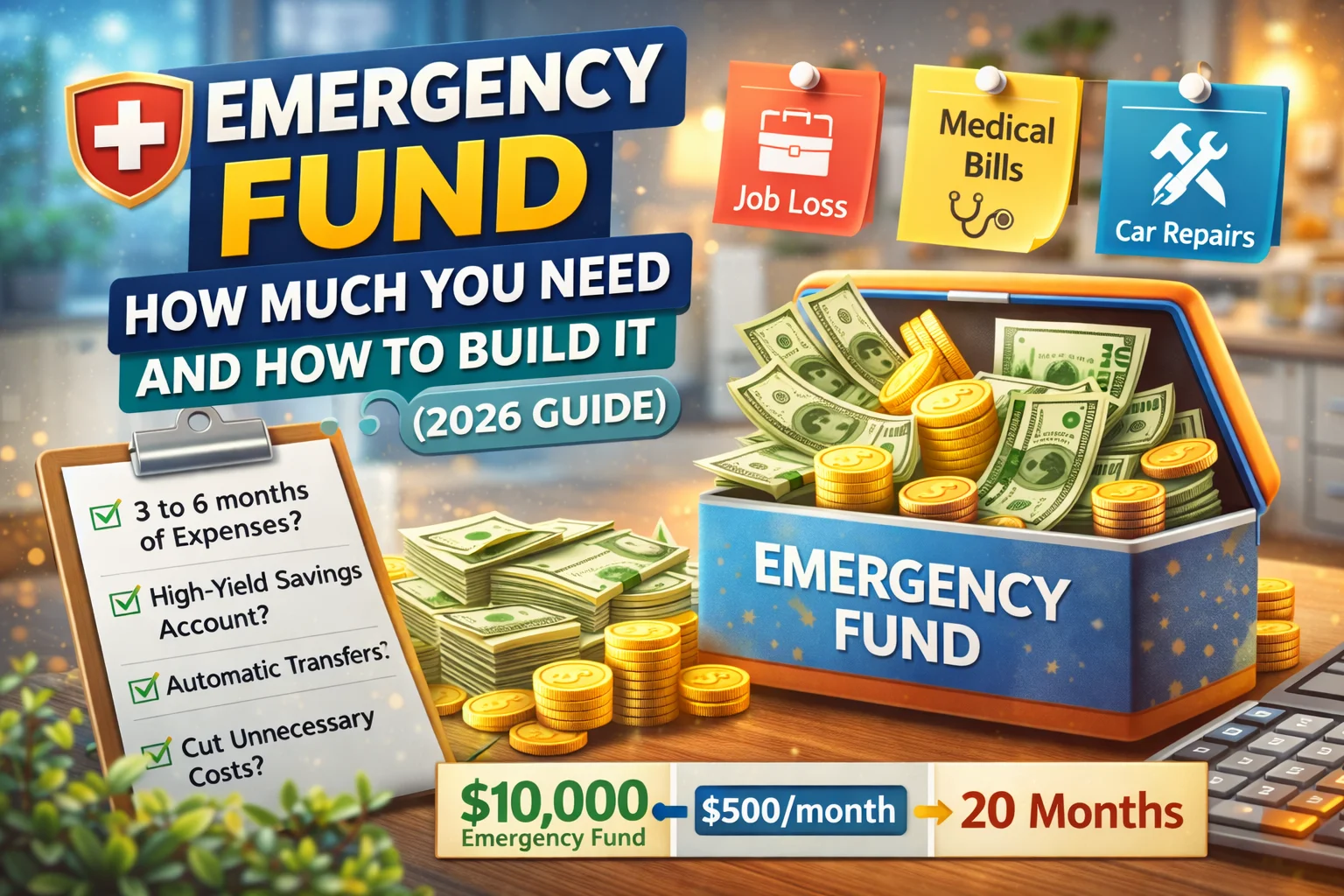
An emergency fund is one of the most important financial tools you can have. Whether it’s an unexpected medical expense, car repair, or job loss, having a safety net can protect you from falling into debt.
In this complete guide, you’ll learn how to build an emergency fund, how much money you really need, and the best strategies to grow your savings quickly in 2026.
What Is an Emergency Fund?
An emergency fund is a dedicated savings account used only for unexpected expenses. It is not for vacations, shopping, or planned purchases.
It acts as a financial cushion that helps you handle life’s surprises without relying on credit cards or loans.
Why Is an Emergency Fund Important?
- Avoid Debt: Cover expenses without using high-interest credit cards
- Reduce Stress: Financial security brings peace of mind
- Stay on Track: Prevent disruptions to your financial goals
- Prepare for the Unexpected: Be ready for emergencies anytime
How Much Should You Save?
The general rule is to save between 3 to 6 months of living expenses. However, the exact amount depends on your situation.
Basic Guidelines:
- 3 months: Stable job and low expenses
- 6 months: Variable income or higher risk
- 9–12 months: Self-employed or uncertain income
For example, if your monthly expenses are $2,000, your emergency fund should be between $6,000 and $12,000.
Where Should You Keep Your Emergency Fund?
Your emergency fund should be easily accessible and safe. The best options include:
- High-yield savings accounts
- Online banks
- Money market accounts
Avoid investing your emergency fund in stocks or risky assets, as you may need the money at any time.
How to Build an Emergency Fund Step-by-Step
Step 1: Set a Realistic Goal
Start with a small goal, such as $500 or $1,000, and build from there.
Step 2: Create a Budget
Track your income and expenses to identify how much you can save each month.
Step 3: Automate Your Savings
Set up automatic transfers to your savings account to stay consistent.
Step 4: Cut Unnecessary Expenses
Reduce spending on non-essential items and redirect that money into your emergency fund.
Step 5: Increase Your Income
Consider side hustles, freelancing, or selling unused items to boost your savings.
How Long Does It Take to Build an Emergency Fund?
The timeline depends on your income and savings rate. For example:
- Saving $200/month = $2,400/year
- Saving $500/month = $6,000/year
Consistency is more important than speed. Even small amounts add up over time.
Tips to Save Money Faster
- Use windfalls: Tax refunds, bonuses, or gifts
- Save loose money: Round up purchases
- Reduce subscriptions: Cancel unused services
- Set challenges: No-spend weeks or months
Common Mistakes to Avoid
- Using the fund for non-emergencies
- Keeping it in a checking account
- Not replenishing it after use
- Trying to save too much too quickly
Emergency Fund vs Savings Account
An emergency fund is a type of savings account, but with a specific purpose. Not all savings are emergency funds.
You should separate your emergency fund from other financial goals like vacations or investments.
What Counts as an Emergency?
- Medical bills
- Car repairs
- Job loss
- Urgent home repairs
Non-emergencies include shopping, entertainment, or planned expenses.
What to Do After Building Your Emergency Fund
Once your emergency fund is complete, you can focus on:
- Investing in the stock market
- Paying off debt
- Saving for big goals (house, car, travel)
Final Thoughts
Building an emergency fund in 2026 is one of the smartest financial decisions you can make. It provides security, reduces stress, and helps you avoid debt during difficult times.
Start small, stay consistent, and make saving a habit. Over time, your emergency fund will become a powerful foundation for your financial future.